



Why Professional Chimney Cleaning Requires Two-Stage Equipment: Airflow Out, Capture In
Professional flue cleaning addresses two physical conditions at the same time. The first is mechanical: accumulated soot, fine ash, and creosote deposits must be displaced from the interior surfaces of the chimney liner using directed airflow. The second is containment: the particles mobilized by that displacement must be actively captured before they leave the immediate work zone.
These conditions exist simultaneously, not sequentially. Chimney soot particles produced by wood and fossil fuel combustion measure between 20 and 600 nanometers in diameter — a scale at which particles don't settle under gravity the way coarse debris does. Once displaced, sub-micron combustion particulate remains suspended in air indefinitely, carried by any available air current. The only mechanism that removes it from the work environment is concurrent active vacuum capture.
This physical reality defines the equipment requirement for the professional flue cleaning process: a directed-airflow chimney blower and an industrial-grade soot vacuum, both rated to the same airflow capacity, both running at the same time, each engineered for its specific function. This article examines the physics behind each phase, the specifications that govern performance, and how a matched chimney blower vacuum system integrates into a professional cleaning workflow.
- Chimney soot primary particles measure 20 to 600 nanometers — placing virtually all combustion particulate within the fine inhalable PM2.5 range defined by the U.S. Environmental Protection Agency.
- Displacement and capture are concurrent requirements. Sub-micron particles do not settle; active vacuum capture must run from the moment displacement begins.
- The National Fire Protection Association 211 standard (Section 14.2.1) requires annual chimney inspection; the Chimney Safety Institute of America sets the cleaning threshold at one-eighth of an inch of sooty buildup, or sooner when any glazing is present.
- System matching — both the blower and the vacuum rated to 94 cubic feet per minute — is what maintains containment equilibrium throughout the cleaning operation.
The Physical Properties of Chimney Soot
Soot is a combustion byproduct: carbon particles and condensed organic compounds produced when fuel burns without complete oxidation. In chimney systems, it accumulates in three progressively denser deposit forms depending on the combustion conditions that created it. Across all three forms, the underlying particulate shares a defining physical characteristic — it is extremely fine.
Research on wood combustion particulate published in a peer-reviewed study in Environmental Health Perspectives (PMC/NIH, 2009) documents primary combustion soot particles measuring between approximately 20 and 600 nanometers in diameter, with the majority of particulate mass falling well below 2.5 micrometers (Naeher et al., PMC/NIH, 2009). To provide scale: a human hair measures approximately 70,000 nanometers in diameter. The PM2.5 classification used by the U.S. Environmental Protection Agency — the fine inhalable particle threshold — sits at 2,500 nanometers. Chimney soot primary particles occupy the range below that threshold, extending to particle sizes more than 100 times finer than the PM2.5 reference point.
At this scale, particle behavior changes fundamentally. Particles below approximately one micrometer don't settle under gravity at any practical rate in normal indoor air conditions. Instead, they undergo Brownian motion — constant random thermal displacement driven by collisions with air molecules — that keeps them suspended in the air column. When chimney soot is disturbed by mechanical brushing or pneumatic displacement, it enters suspension and remains there. It doesn't fall to a drop cloth. It follows available air currents and redistributes throughout whatever space the airflow reaches.
The Chimney Safety Institute of America (CSIA) identifies three degrees of creosote deposit. First-degree deposits are loose, powdery, and primarily carbonaceous — directly responsive to brush action combined with airflow displacement. Second-degree deposits are hardened, glazed flakes that require rotary mechanical disruption before effective vacuum capture can occur. Third-degree deposits are dense tar accumulations requiring chain-tool disruption. In all three cases, the displaced material includes sub-micron particle fractions whose physical behavior is identical regardless of the original deposit form.
Wood and fossil fuel combustion produces primary soot particles measuring approximately 20 to 600 nanometers in diameter, with the majority of particulate mass falling within the PM2.5 classification (≤ 2.5 micrometers). At sub-micron scale, Brownian motion keeps particles suspended in air indefinitely — they don't settle under gravity. Source: Naeher et al., Environmental Health Perspectives, PMC/NIH, 2009; U.S. EPA — Particulate Matter Basics.
What Directed Airflow Accomplishes in the Flue
Displacing deposits from the interior surfaces of a chimney liner requires introducing airflow into a confined, geometrically complex space that presents resistance in the form of dampers, offsets, cross-section changes, and deposit mass itself. Two specifications determine whether a chimney blower can perform this function effectively: cubic feet per minute and inches of waterlift.
Cubic Feet Per Minute — Volumetric Displacement
Cubic feet per minute (CFM) is the volumetric airflow rating — the quantity of air the blower moves per unit of time. In the flue cleaning process, this specification determines reach: a higher CFM rating means more air volume enters the liner per second, creating the sustained velocity needed to lift and mobilize deposits across the full length of the flue. At 94 cubic feet per minute from a one-horsepower motor, a chimney blower sustains sufficient volumetric flow through a standard residential or light commercial flue to initiate effective particle displacement from the liner surface.
Inches of Waterlift — Pressure Against Restriction
Inches of waterlift describes static pressure — the blower's ability to overcome resistance. Every element of a flue system imposes resistance on airflow: a damper that partially restricts the throat, creosote deposits that narrow the effective liner diameter, a 90-degree offset in a prefabricated system, or a cap with limited open area. Waterlift measures the blower's ability to maintain displacement velocity at the point of deposit contact despite that combined resistance. A rating of 90 inches of waterlift indicates the blower can sustain working pressure against substantial restriction within the system without losing effective airflow at the nozzle tip.
The relationship between CFM and waterlift matters here. High CFM alone doesn't guarantee penetration of a restricted flue — the static pressure behind the flow determines whether the blower can push through the accumulated resistance and still deliver displacement velocity where it's needed. Both specifications work together.
Nozzle Precision — Concentrated Kinetic Energy
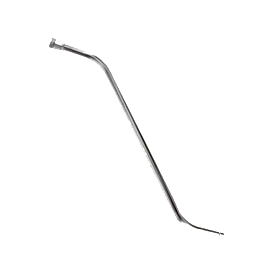
Nozzle geometry is the third governing factor in the displacement phase of professional chimney cleaning. A blower introducing 94 cubic feet per minute through a one-inch outer-diameter tapered nozzle concentrates that volumetric flow into a focused, high-velocity stream at the point of contact. This isn't an accessory choice — it converts broad airflow into directed kinetic energy at the deposit surface. The one-inch diameter also allows controlled directional placement within the liner cross-section, including angled orientation toward glazed deposits on specific liner walls.
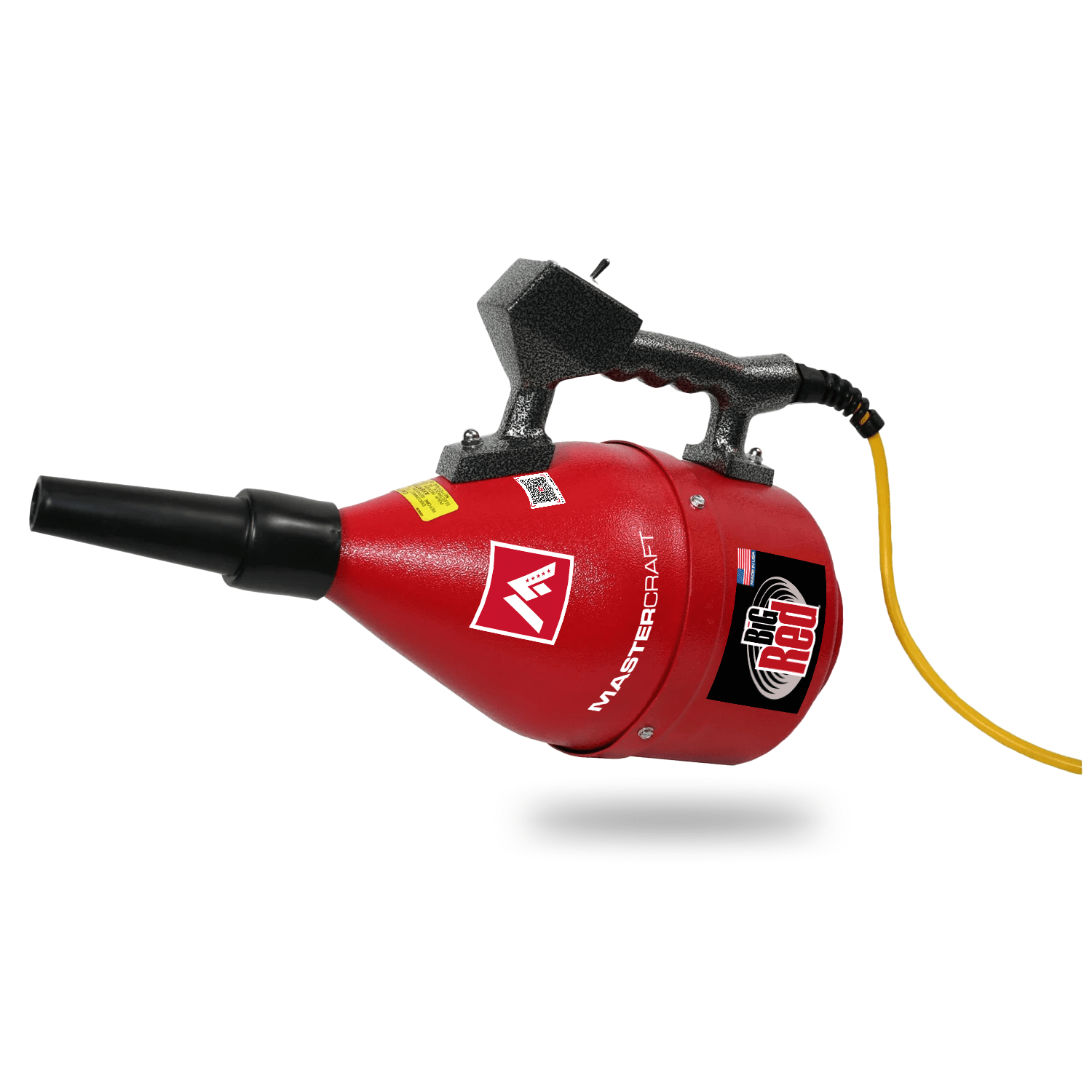
The Mastercraft® Big Red B650 addresses all three governing factors: 94 cubic feet per minute output, 90 inches of waterlift, one-horsepower two-stage motor, and one-inch outer-diameter tapered nozzle. These specifications combine to produce the directed, high-pressure airflow that the displacement phase of professional chimney cleaning requires — penetrating restrictions, reaching the full liner length, and directing kinetic energy at the deposit face.
In professional chimney cleaning equipment, cubic feet per minute governs the volume of air available for deposit displacement, while inches of waterlift governs the static pressure available to overcome flue restriction. A blower rated at 94 cubic feet per minute and 90 inches of waterlift through a one-inch precision nozzle addresses both requirements simultaneously. Source: Mastercraft® USA — Big Red B650 specifications.
Why Capture Must Run Concurrently With Displacement
The vacuum capture phase of the flue cleaning process isn't a cleanup step that follows displacement. It's a concurrent process that must be operational before displacement begins and must continue without interruption throughout. The particle physics established in the previous section explain why: once sub-micron combustion particulate enters suspension, the only mechanism that removes it from the environment is directed airflow toward a filtration system operating in real time.
Air-to-Cloth Ratio — The Governing Filtration Specification
The specification that governs vacuum capture performance in professional chimney tools is the air-to-cloth ratio — the relationship between the volume of air moving through the vacuum (in cubic feet per minute) and the surface area of the filtration media handling that air. For fine-particulate capture, including combustion soot, industry guidance specifies a ratio between 2:1 and 4:1 cubic feet per minute per square foot of filter media for cartridge-type filtration systems (Camfil APC; Diversitech). This ratio ensures the velocity of air passing through the filter media remains low enough to allow effective particle interception at the filter surface rather than particle penetration through it.
Why does velocity through the filter matter? At higher velocities, fine particles — particularly those in the sub-micron range — have sufficient momentum to pass through filter media rather than being captured on it. Maintaining the correct air-to-cloth ratio keeps particle velocity at the filter surface within the range where interception mechanisms (inertial impaction, diffusion, and electrostatic attraction) can operate effectively.
Multi-Stage Filtration — Why a Single Stage Is Insufficient
A chimney cleaning operation generates a heterogeneous mixture of particle sizes in the same airstream: coarse soot flakes and char fragments, fine ash, and sub-micron primary combustion particles. A single-stage filtration system optimized for coarse material allows the fine fraction through. A single-stage system optimized for fine particles loads rapidly under the coarse fraction and loses airflow performance. Multi-stage filtration allocates these fractions across dedicated capture stages.
The United States Environmental Protection Agency defines the HEPA standard as 99.97 percent capture efficiency at 0.3 micrometers — the Most Penetrating Particle Size (MPPS), which is simultaneously the most difficult size for both inertial impaction and Brownian diffusion capture mechanisms (U.S. EPA — What Is a HEPA Filter?). The HEPA standard was established at 0.3 micrometers precisely because it represents the hardest case: particles larger than 0.3 micrometers are captured efficiently by inertial impaction, and particles smaller than 0.3 micrometers are captured efficiently by diffusion. The 0.3-micrometer size falls in the gap between both mechanisms.
As established above, chimney soot particles span 0.02 to 0.6 micrometers — a range that directly straddles the HEPA MPPS standard. Standard vacuum filtration systems that perform adequately on household dust or construction debris are not engineered for this particle size range. Professional chimney cleaning equipment requires filtration designed specifically for sub-micron combustion particulate.

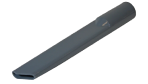
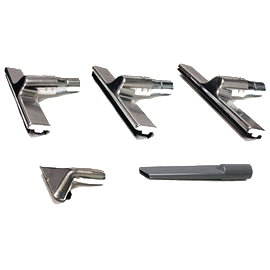
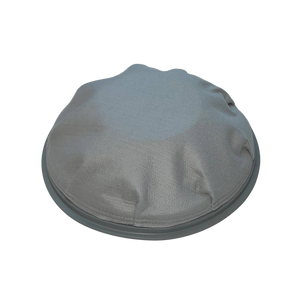
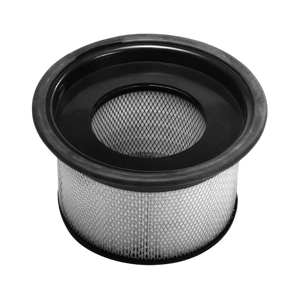
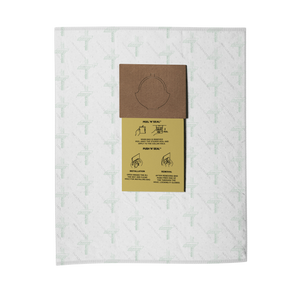
The Mastercraft® Sootmaster 641M and 652M use a triple-stage filtration system for this reason: a cloth pre-filter with vinyl gasket intercepts coarse material and protects the bag stage from premature loading, a five-layer synthetic microply filter bag captures the fine and medium particle fraction, and a final motor-protection barrier addresses the sub-micron fraction. The all-metal cold rolled steel recovery tank provides a sealed containment environment for collected material from the moment it enters the system.
The U.S. Environmental Protection Agency defines HEPA filtration as 99.97% efficiency at 0.3 micrometers — the Most Penetrating Particle Size, where both inertial impaction and Brownian diffusion mechanisms are least effective. Chimney soot primary particles span 0.02 to 0.6 micrometers, straddling that standard directly. Single-stage filtration systems designed for coarse dust don't address this particle size range. Source: U.S. EPA — What Is a HEPA Filter?; PMC/NIH, 2009.
System Matching: Why the CFM Ratings Must Be Equal
The technical relationship between the chimney blower and the soot vacuum in a professional chimney blower vacuum system is governed by a single principle: the volume of air displaced by the blower must be matched by the volume of air drawn through the vacuum's filtration system. When these volumes are equal, the working environment operates at containment equilibrium. When they're unequal, the pressure balance shifts.
A chimney blower introducing 94 cubic feet per minute into the flue system, operating concurrently with a vacuum rated below that airflow on the intake side, creates a net-positive pressure condition in the environment surrounding the cleaning operation. The volume introduced by the blower exceeds the volume being processed by the capture system, and the surplus — carrying displaced particulate in suspension — seeks any available outlet. In a contained work area, this is a measurable pressure differential. The physical consequence is that the containment the vacuum is intended to provide doesn't hold at the system level.
Matching both the Mastercraft® Big Red B650 and the Sootmaster 641M or 652M at 94 cubic feet per minute resolves this by creating equilibrium: the displacement phase and the capture phase process equal air volumes per unit of time. The one-horsepower motor rating on both units means both can sustain their rated output at the same voltage load — 120V — over the duration of a full cleaning job without one side of the system working harder than the other.
It's worth noting that filter loading affects this balance progressively over the course of an operation. As the Sootmaster's triple-stage filtration system accumulates collected material, resistance through the filter media increases. This is a normal consequence of effective capture, and it's why monitoring vacuum performance and changing filter bags at the appropriate threshold is part of maintaining the CFM matching condition throughout a multi-hour chimney cleaning job.
Professional chimney cleaning equipment requires CFM-matched blower and vacuum units to maintain containment equilibrium. When blower airflow output exceeds vacuum intake capacity, the resulting pressure differential in the work zone means displaced particulate is not fully processed by the capture system in real time. Matching both at 94 cubic feet per minute creates a closed-loop operating condition. Source: Mastercraft® USA — Big Red B650; Sootmaster 641M specifications.
How the Two-Stage System Integrates Into the Flue Cleaning Workflow
The following describes how a matched two-stage equipment configuration integrates into a professional flue cleaning workflow. The sequence reflects the physics of the process — vacuum established first, blower introduced second.
Deposit Assessment and Cleaning Threshold
The National Fire Protection Association 211 (Standard for Chimneys, Fireplaces, Vents, and Solid Fuel-Burning Appliances), Section 14.2.1, requires that chimneys, fireplaces, and vents receive inspection at a minimum of once per year. The Chimney Safety Institute of America specifies that professional cleaning is indicated when sooty buildup reaches one-eighth of an inch in depth, or whenever any glazing is present — regardless of deposit depth. These standards define the cleaning frequency. The deposit assessment at the start of each job determines the mechanical approach: whether standard brush-and-vacuum displacement is sufficient, or whether rotary mechanical tools are required for second or third-degree creosote deposits before the two-stage airflow process begins.
Vacuum Establishment
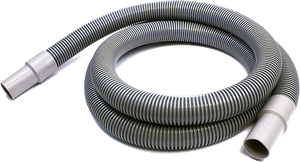
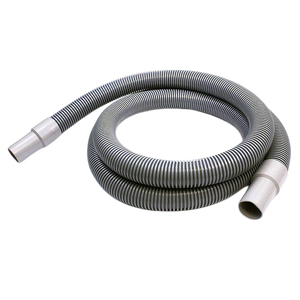
The Sootmaster 641M or 652M is connected via its 10-foot rubber-lined hose to the appropriate access point — the fireplace opening, a clean-out door, or a register port depending on the system configuration. The triple-stage filtration components are confirmed properly seated: the cloth pre-filter with vinyl gasket verified in position, the five-layer synthetic microply filter bag confirmed sealed within the cold rolled steel tank. The vacuum reaches operating speed and its rated 94 cubic feet per minute before the blower is introduced into the flue. This sequence ensures the capture system is processing the work environment before displacement begins.
Blower Operation
The Big Red B650 is introduced at the upper access point — typically the chimney cap or through a top-down access port — with its one-inch precision nozzle directed at the deposit surface. At 90 inches of waterlift, the blower pushes through the restriction of the liner and any deposit accumulation to deliver 94 cubic feet per minute of directed airflow at the deposit face. For first-degree loose soot, this airflow volume is sufficient to mobilize material into the vacuum's intake stream. Where prior mechanical action has already disrupted second or third-degree deposit layers, the B650 provides the directed airflow that clears mobilized material from the liner surfaces and moves it toward the capture inlet.
Concurrent Operation Throughout
Both units run simultaneously throughout the entire cleaning phase. There's no pause between displacement and capture — maintaining both airflow streams continuously is what makes the closed-loop system function as intended. The Sootmaster's steel tank construction means that collected material is sealed from the moment it enters the recovery vessel. At job completion, the filter bag is sealed within the tank before disconnection, and the pre-filter cloth is inspected for loading and replaced as required.
Equipment Specifications at a Glance
| Specification | Big Red B650 Blower | Sootmaster 641M | Sootmaster 652M |
|---|---|---|---|
| Motor | 1 HP, two-stage, 120V | 1 HP, 120V | 1 HP, 120V |
| Airflow | 94 CFM | 94 CFM | 94 CFM |
| Waterlift / Static Pressure | 90 inches | — | — |
| Nozzle / Inlet | 1-inch OD tapered precision nozzle | 1.5-inch accessories; 10-ft rubber-lined hose | 1.5-inch accessories; 10-ft rubber-lined hose |
| Filtration | Two-stage motor design | Triple-stage: cloth pre-filter + 5-layer synthetic microply bag + motor barrier | Triple-stage: cloth pre-filter + 5-layer synthetic microply bag + motor barrier |
| Recovery Tank | — | 3.5 gal cold rolled steel, sealed | 5 gal cold rolled steel, sealed |
| Weight | 19 lbs | 69 lbs | 69 lbs |
| Power Cord / Hose | 30-ft, 18/3 STW cord | 10-ft rubber-lined vacuum hose | 10-ft rubber-lined vacuum hose |
| Safety Certification | — | UL Listed | UL Listed |
The Equipment Configuration as Professional Standard
The two-stage approach to professional chimney cleaning isn't an upgraded method applied to a task that simpler equipment can handle. It's the direct response to the physical properties of combustion residue in a flue system.
- Chimney soot primary particles measure 20 to 600 nanometers — they don't settle, they suspend. Displacement without concurrent capture means they redistribute throughout the work environment.
- Sub-micron particles straddle the HEPA Most Penetrating Particle Size standard at 0.3 micrometers. Single-stage filtration systems designed for coarser dust don't address this particle size range adequately.
- CFM matching between the blower and the vacuum is the system-level specification that determines whether the closed loop holds. Mismatched ratings break containment at the physics level — not at the technique level.
- The National Fire Protection Association 211 standard and the Chimney Safety Institute of America deposit guidelines define when professional cleaning is required. The particle physics of what is being cleaned defines the equipment needed to clean it.
Professional chimney cleaning equipment — a matched blower and industrial soot vacuum running concurrently — is what the physics of the job requires. That's not a product category. It's a system specification.
View Sootmaster Equipment →Frequently Asked Questions
Waterlift is the static pressure rating of a blower — specifically, the maximum pressure differential it can sustain against resistance. In a chimney system, resistance comes from dampers, cross-section changes, deposit buildup, and flue geometry. A blower's motor power determines how much energy it can draw; waterlift determines how effectively that energy translates into displacement velocity against the specific resistance profile of the flue. Two blowers with identical motor ratings can have very different waterlift specs, with significantly different penetration performance in restricted systems. The Mastercraft® Big Red B650 provides 90 inches of waterlift, sustaining displacement pressure through the full resistance of a standard residential or commercial flue system.
Displacement and capture are physically opposed functions. Displacement requires introducing pressurized air into the flue to mobilize deposits — pushing air in. Capture requires drawing air out through a filtration system — pulling air out. A single tool operating in one direction cannot simultaneously operate in the other. A vacuum drawing 94 cubic feet per minute inward creates negative pressure at its inlet; a blower pushing 94 cubic feet per minute outward creates positive pressure at its nozzle. These are distinct, simultaneous, and directionally opposite airflow demands. The flue cleaning process requires both operating concurrently, which means separate professional chimney tools.
The National Fire Protection Association 211 (Standard for Chimneys, Fireplaces, Vents, and Solid Fuel-Burning Appliances), Section 14.2.1, requires chimneys, fireplaces, and vents to be inspected at a minimum of once per year. The Chimney Safety Institute of America recommends initiating professional cleaning when sooty buildup reaches one-eighth of an inch in depth, and immediately when any glazing is present regardless of deposit depth — because glazed (second and third-degree) creosote behaves differently under mechanical cleaning than loose soot and requires different professional chimney tools and technique.
Chimney cleaning generates a heterogeneous particle mixture across a wide size range simultaneously: coarse soot fragments and char, fine ash, and sub-micron primary combustion particles. A single filter stage optimized for fine particles loads rapidly under the coarse fraction. A single stage optimized for coarse material passes the fine fraction. Triple-stage filtration — a cloth pre-filter for coarse interception, a five-layer synthetic microply bag for fine particles, and a final motor-protection barrier — distributes the particle mixture across dedicated stages. This approach maintains adequate air-to-cloth ratio in each stage, preserving the cubic feet per minute throughput required for the matched chimney blower vacuum system to function as intended throughout the job. See the Mastercraft® Sootmaster 641M and 652M for complete filtration specifications.