


Why HEPA Certification Alone Does Not Guarantee Containment: The Role of the Gasket Seal in Professional Vacuum Filtration
A High Efficiency Particulate Air filter certified at 99.97 percent efficiency at 0.3 microns delivers that efficiency through the filter medium. The certification test confirms that air forced through the borosilicate glass fiber matrix exits with 99.97 percent of sub-micron particles retained in the medium. What the certification does not address is whether all of the air exiting a vacuum system passes through the medium. The answer to that question depends entirely on the mechanical interface between the filter assembly and the vacuum housing.
At that interface — the perimeter of the filter frame against the interior of the vacuum housing — a bypass pathway exists unless it is positively sealed. The pathway does not require a visible gap or obvious mechanical failure. Negative-pressure operating conditions make even a narrow and intermittent gap function as a high-flow bypass route, directing a fraction of the total airstream around the filter medium and out through the exhaust unfiltered. The filter itself may be in perfect condition and at full certification-level efficiency. The bypass operates independently of filter condition.
This reference addresses the engineering function of the gasket seal in professional-grade HEPA vacuum filtration systems — what bypass filtration is, where it originates, how a perimeter gasket seal eliminates it, what system-level Hot DOP certification confirms, and why these distinctions determine whether a vacuum system meets the technical standard for professional containment applications.
- High Efficiency Particulate Air certification at 99.97 percent efficiency tests the filter medium under controlled conditions. It does not certify what happens at the interface between the filter assembly and the vacuum housing — the location where bypass filtration originates.
- Bypass filtration routes airflow around the filter medium rather than through it. A one percent bypass fraction at the filter-to-housing interface reduces a 99.97 percent rated filter to approximately 98.97 percent system-level containment efficiency — a degradation that visual inspection cannot detect during operation.
- A perimeter gasket seal fills the gap between the filter frame and the housing contact surface, forcing all airflow through the filter medium. System-level Hot DOP certification — which tests the complete assembly including the gasket at rated airflow — confirms that certified efficiency applies to the complete airstream, not only to the medium in isolation.
- The Occupational Safety and Health Administration silica standards, the Environmental Protection Agency Renovation, Repair and Painting rule, and Institute of Inspection, Cleaning and Restoration Certification standards for mold and water damage remediation all require High Efficiency Particulate Air vacuum filtration. Specifying sealed, system-level certified assemblies satisfies both the regulatory definition and its technical intent.
- Gasket condition must be inspected at every filter service interval. Compression set, surface cracking, or non-uniform seating contact are replacement indicators — not conditions to monitor over time.
What HEPA Certification Measures — and What It Does Not
High Efficiency Particulate Air certification is determined by a test method known as Hot DOP — Dispersed Oil Particulate — in which a precisely generated aerosol of liquid droplets at 0.3 microns in aerodynamic diameter is introduced upstream of the filter medium at rated airflow, and the particle concentration downstream is measured against upstream concentration. The ratio gives the penetration fraction. The U.S. Environmental Protection Agency and the Occupational Safety and Health Administration both define a High Efficiency Particulate Air filter as one retaining at least 99.97 percent of particles at 0.3 microns under these test conditions — meaning that for every 10,000 particles at that diameter passing into the medium, at most 3 exit.
The 0.3-micron test diameter corresponds to the Most Penetrating Particle Size in a dense glass fiber matrix. At this diameter, the two primary fine-particle capture mechanisms are simultaneously least effective: inertial impaction works best at larger particle sizes where mass is sufficient to maintain off-trajectory paths into fiber surfaces, and Brownian diffusion works best at smaller particle sizes where random molecular collisions deflect particles into fiber contact at high rates. Particles at 0.3 microns sit at the trough between those two domains. A filter certified at 99.97 percent at this threshold exceeds that efficiency for all other particle sizes — coarser and finer alike.
The critical qualification is that the Hot DOP test challenges the filter medium in isolation. The test apparatus presents a controlled aerosol to the upstream face of the medium and measures what exits the downstream face. The filter frame, the vacuum housing, the interface between frame and housing, and the mechanical assembly method are not part of the certification unless the complete assembled unit is tested in a fixture that replicates operational seating conditions and rated airflow. Most filter media certifications reflect media-only testing. System-level performance under operational conditions is a separate question, answered by a separate test.
This is not a manufacturing limitation or a regulatory gap. It is the structural reality of a filtration system with multiple components. The filter medium performs exactly as certified within the boundaries of the medium itself. Whether those boundaries coincide with the complete airstream exiting the vacuum system depends on the design of the housing interface — and on whether that interface is sealed.
The U.S. Environmental Protection Agency defines a High Efficiency Particulate Air filter as one retaining at least 99.97 percent of airborne particles at 0.3 microns in aerodynamic diameter — the Most Penetrating Particle Size in a glass fiber medium — under rated airflow test conditions (U.S. Environmental Protection Agency, Indoor Air Quality Reference). This certification applies to the filter medium under test. System-level performance in an assembled vacuum configuration depends additionally on seal integrity at the filter-to-housing interface, which the media certification does not address.
What Is Bypass Filtration and Why Does It Occur at the Housing Interface?
Bypass filtration is the routing of airflow around a filter medium rather than through it. In a vacuum system, this occurs when a pathway of lower pressure resistance than the filter medium exists at the boundary between the filter assembly and the vacuum housing. Under the negative pressure that defines vacuum operation, airflow distributes across all available pathways in inverse proportion to resistance. The dense borosilicate glass fiber matrix of a High Efficiency Particulate Air filter presents a high-resistance flow path. Any gap at the filter perimeter presents effectively zero resistance relative to the medium. A fraction of the total airstream — proportional to the relative resistance of the bypass pathway — routes through the gap and exits the exhaust without passing through the filter.
The bypass pathway does not require a large or visible gap to function at a meaningful scale. In a negative-pressure system operating at rated airflow, a gap of millimeter-scale dimensions at the filter perimeter can carry a significant fraction of the total airstream. Pressure differentials across a loaded filter element in active use are substantial — typically in the range of several inches of water column. Under these conditions, even intermittent contact at the filter perimeter creates a low-resistance route that airflow will preferentially follow. The bypass fraction is not related to the condition, certification level, or service age of the filter medium itself. The bypass operates at the housing interface, independently of the filter.
The consequence for system-level containment efficiency is quantifiable through straightforward calculation. System efficiency equals the non-bypass fraction multiplied by the filter's rated efficiency, plus the bypass fraction multiplied by zero — because bypassed air exits with no filtration. For a 99.97 percent rated filter, each one percent of bypass reduces system-level efficiency by approximately one full percentage point. A one percent bypass fraction — far too small to detect visually during operation — reduces a 99.97 percent rated filter to 98.97 percent system efficiency. At two percent bypass, system efficiency falls to 97.97 percent. At five percent bypass, system efficiency is 94.97 percent. These figures represent the total reduction in contained particles across the complete airstream, not the filter medium's performance in isolation.
The Engineering Function of the Perimeter Gasket Seal
A perimeter gasket is a compressible seal that fills the mechanical gap between the filter assembly frame and the vacuum housing contact surface. When the filter is properly seated and the housing is closed, the gasket is compressed to a controlled thickness against the housing contact surface, creating a continuous seal around the entire perimeter of the filter frame. This seal eliminates the bypass pathway by presenting uniform, high mechanical resistance to airflow at every point along the filter perimeter. All airflow through the system is directed through the filter medium, and the medium's certified efficiency applies to the complete airstream — not to a fraction of it.
The gasket material is selected for dimensional stability under repeated compression cycling, resistance to the temperature conditions present in vacuum exhaust air, and compatibility with the surface finish of the housing contact surface. These properties determine whether the gasket maintains its sealing function across the operational life of the filter element. A gasket that takes permanent compression set — where the material does not recover its original thickness after the load from housing closure is removed — loses its ability to fill the gap fully on subsequent filter installations. A gasket with surface cracking allows high-resistance but non-zero airflow through the damaged seal material, reducing rather than eliminating the bypass fraction. Neither condition is obvious from the outside of the assembled housing during operation.
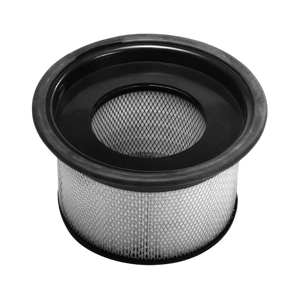
System-level Hot DOP certification tests the complete filter assembly — filter medium, frame, and gasket — installed in a fixture that replicates the vacuum housing interface at rated airflow and seating force. A filter assembly carrying system-level Hot DOP certification has demonstrated 99.97 percent efficiency not for the medium in isolation, but for the complete assembly under operational conditions, including the gasket seal. The Mastercraft® INFILTRATOR 12-inch High Efficiency Particulate Air filter with integrated gasket (Part 476617) carries system-level Hot DOP certification at 100 cubic feet per minute — the airflow rating that matches the Enviromaster vacuum system's operational range.
A perimeter gasket seal at the filter-to-housing interface eliminates the bypass pathway by compressing uniformly against the housing contact surface and forcing all airflow through the filter medium. System-level Hot DOP certification — which tests the complete filter assembly including the gasket seal at rated airflow — confirms that 99.97 percent efficiency applies to the complete airstream exiting the vacuum system, not only to the air that passes through the filter medium itself.
The Sealed Critical HEPA Filter Cartridge for Probe Applications
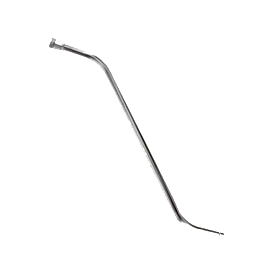
Probe vacuum applications introduce airflow into the system through a nozzle of small diameter inserted into ductwork, wall cavities, structural voids, or other enclosed spaces where a standard floor nozzle attachment cannot reach. The probe creates a continuous, high-velocity airstream from the insertion point through the filter assembly to the motor discharge. In regulated abatement environments — lead paint renovation, asbestos abatement, and High Efficiency Particulate Air duct cleaning in occupied structures — the complete pathway from probe inlet to exhaust discharge must meet the same containment standard that applies to the filter medium itself.
A probe configuration concentrates the intake airstream at a fixed, small-diameter entry point rather than distributing it across the wider inlet geometry of a standard floor tool attachment. The filter assembly's sealing performance is, if anything, more demanding in probe operation because these systems are frequently deployed in confined spaces where exhaust discharge occurs within proximity of the work area — or where the operator is working in an enclosed containment whose air must remain uncontaminated by the vacuum's own exhaust. A sealed critical High Efficiency Particulate Air filter cartridge designed for probe applications addresses these interface requirements through the same gasket-seal engineering that eliminates bypass in standard configurations, adapted for the inlet geometry and airflow characteristics of probe systems.
Applications that call for probe-specific sealed High Efficiency Particulate Air filter configurations include High Efficiency Particulate Air duct cleaning in structures with regulatory containment requirements, surface sampling and debris collection in sealed remediation containments, and inspection or extraction operations in confined spaces where exhaust recirculation into the work environment would represent a containment failure regardless of the distance from the work surface.
Where Sealed HEPA Vacuum Filtration Appears in Professional and Regulatory Frameworks
The Occupational Safety and Health Administration's crystalline silica standards — 29 C.F.R. § 1910.1053 for general industry and 29 C.F.R. § 1926.1153 for construction — require the use of High Efficiency Particulate Air vacuum filtration where feasible for cleaning activities that disturb or would disturb settled crystalline silica. Both standards define a High Efficiency Particulate Air filter as one achieving at least 99.97 percent efficiency at 0.3 microns. The Environmental Protection Agency's Renovation, Repair and Painting rule requires High Efficiency Particulate Air vacuum filtration for pre-renovation cleaning and post-work cleanup in regulated lead paint environments. These regulatory instruments specify the efficiency threshold; they identify the standard that must be met but do not specify sealed versus unsealed assemblies in explicit terms.
The Institute of Inspection, Cleaning and Restoration Certification publishes industry standards that address vacuum filtration requirements in restoration contexts. The IICRC S500 Standard for Professional Water Damage Restoration and the IICRC S520 Standard for Professional Mold Remediation both specify High Efficiency Particulate Air vacuum filtration as part of contamination control protocols in environments with biological hazard, elevated moisture, or documented microbial growth. These standards reflect professional consensus on what constitutes technically adequate containment in restoration operations — and the implicit assumption behind that consensus is that the vacuum system's certified efficiency applies to its complete exhaust, not only to the air passing through the unbypasssed fraction of the filter medium.
Where regulatory and industry standards specify High Efficiency Particulate Air vacuum filtration for professional containment work, specifying assemblies with system-level Hot DOP certification satisfies both the letter of the requirement and its technical intent: that all air exiting the system is filtered to the High Efficiency Particulate Air standard. A vacuum where the filter medium meets the 99.97 percent threshold but the assembly interface introduces a bypass fraction delivers less than certified performance to the work environment at the system level. Sealed, system-level certified assemblies close the gap between media certification and operational containment performance — and produce a result that is defensible against both regulatory audit and professional accountability.

How Professionals Should Verify Filter Seal Condition Before and During Use
Gasket seal integrity is a pre-use inspection item, not a periodic maintenance task. It should be verified at every filter service event and any time the filter assembly has been removed from the housing for any reason, including incidental handling. The inspection confirms four conditions: the gasket material is free from surface cracking and shows no permanent compression set; the filter frame seats fully against the housing contact surface without angular tilt or visible gap on any side; the housing closure mechanism engages completely and applies the manufacturer's rated seating force to the gasket; and the gasket presents uniform contact around the full perimeter, without any section that appears compressed measurably more or less than adjacent sections.
Pressure differential behavior during operation provides an indirect and often underused indicator of filter assembly integrity. Under normal service conditions, static pressure differential across the filter increases over the course of a job as the medium loads with captured particulate — the resistance of the medium rises as the loaded area expands. A filter assembly with significant bypass that routes a fraction of airflow around the medium may show abnormally low pressure rise during high-particulate operations, because the bypass fraction reduces the loading rate on the medium by keeping a portion of the particulate-laden air from ever reaching it. This is the inverse of the condition most technicians watch for. Rather than monitoring only for high pressure differential as a sign of a loaded filter requiring service, an abnormally flat or low pressure rise in a high-particulate environment may indicate that bypass is occurring at the housing interface — and that the system is not delivering certified containment to its exhaust stream.
Gasket replacement should occur at the first sign of compression set — the condition where the gasket no longer returns to its original cross-section thickness when the housing is opened after a service cycle — and at any evidence of cracking, deformation, or surface deterioration visible under direct inspection. The manufacturer's specified replacement interval for the gasket, where specified separately from the filter element replacement interval, applies to the full service cycle regardless of visual condition. When a gasket is replaced, proper seating of the new assembly should be verified before the system returns to service. A new gasket installed incorrectly in a housing with an angular misalignment or debris on the contact surface will not seal any better than a worn one.
Field verification of gasket seal integrity requires confirming four conditions at each filter service event: absence of surface cracking and compression set on the gasket material; full-perimeter seating contact with the housing surface; complete engagement of the housing closure mechanism; and uniform gasket compression around the entire filter perimeter. An abnormally flat or low pressure differential rise during high-particulate operations may indicate bypass at the housing interface, directing contaminated air around the filter medium and out through the exhaust unfiltered.
Sealed Filtration as a Professional Standard, Not a Premium Option
The containment performance of a High Efficiency Particulate Air vacuum filtration system is determined at the weakest point in the assembly. A certified filter medium in a housing without a positive gasket seal delivers the medium's efficiency to the fraction of the airstream that passes through the medium — and zero efficiency to the fraction that bypasses it. The proportional split between those two fractions is set by the housing interface, not the filter. A sealed, system-level Hot DOP certified assembly delivers the certified efficiency to the complete airstream, which is the technical standard that professional containment applications require.
- High Efficiency Particulate Air filter certification at 99.97 percent applies to the filter medium under test conditions. System-level performance in an assembled vacuum depends additionally on whether the housing interface is sealed — a question the media certification does not answer.
- A one percent bypass fraction at the filter-to-housing interface reduces system containment efficiency from 99.97 percent to 98.97 percent. A five percent bypass fraction reduces it to 94.97 percent. Neither condition is detectable through visual inspection of the filter element itself.
- System-level Hot DOP certification — which tests the complete filter assembly including the gasket seal at rated airflow — is the technically appropriate specification for silica abatement, lead paint renovation, mold remediation, fire damage restoration, and all other applications where regulatory or professional standards require High Efficiency Particulate Air vacuum filtration.
- Gasket condition should be inspected and verified at every filter service event. Compression set, surface cracking, or non-uniform seating contact are replacement indicators. Pressure differential behavior during operation provides an indirect indicator of bypass; abnormally low pressure rise in a high-particulate environment warrants immediate filter assembly inspection.
The Mastercraft® INFILTRATOR High Efficiency Particulate Air filter line provides system-level Hot DOP certified filter assemblies with integrated gasket seals for professional containment applications. Verify rated airflow compatibility between the filter element and your vacuum system model before specifying a replacement assembly.
View Mastercraft® INFILTRATOR HEPA FiltersFrequently Asked Questions
Why does bypass filtration matter if the High Efficiency Particulate Air filter medium is rated at 99.97 percent?
The 99.97 percent rating applies to the filter medium under test conditions — it describes what happens to particles that pass through the medium itself. Bypass is airflow that routes around the medium entirely, not through it. A 99.97 percent rated filter with one percent bypass at the housing interface delivers approximately 98.97 percent system-level containment efficiency: the bypass fraction exits the exhaust unfiltered, regardless of what the medium does to the air that does contact it. The filter medium's certified performance is not degraded. The system's containment performance is degraded by the bypass fraction.
What is the difference between a media-certified High Efficiency Particulate Air filter and a system-level Hot DOP certified filter assembly?
A media-certified filter carries efficiency data for the filter medium tested in isolation — air forced through the medium, with particle counts measured upstream and downstream. System-level Hot DOP certification tests the complete assembled unit — filter medium, frame, and gasket seal — installed in a fixture that replicates operational housing conditions at rated airflow. The system-level test confirms that the certified 99.97 percent efficiency applies to the complete airstream under operating conditions. For any professional containment application, system-level certification is the more defensible specification because it addresses what actually exits the vacuum during use.
Do the Occupational Safety and Health Administration silica standards require sealed High Efficiency Particulate Air vacuum assemblies specifically?
The standards at 29 C.F.R. § 1910.1053 and § 1926.1153 require High Efficiency Particulate Air vacuum filtration — defined as 99.97 percent efficiency at 0.3 microns — where feasible for cleaning activities that disturb settled crystalline silica. They reference the efficiency threshold without explicitly specifying sealed versus unsealed assemblies. In professional practice, specifying assemblies with system-level Hot DOP certification satisfies both the regulatory efficiency definition and its technical intent: that all air exiting the system during silica cleaning operations is filtered to the High Efficiency Particulate Air standard, including any fraction that would otherwise bypass an unsealed filter interface.
Can a degraded or aging gasket be identified before the filter assembly is removed from service?
Gasket deterioration is most reliably detected through direct inspection during filter service events, when the housing is opened and the gasket can be examined for compression set, surface cracking, and seating uniformity around the full perimeter. An indirect operational indicator is abnormally low or flat pressure differential rise during high-particulate work — a condition that may indicate bypass airflow is reducing the loading rate on the filter medium. Relying on operational pressure data alone is not a substitute for scheduled gasket inspection at each service event. Early-stage gasket degradation may not produce detectable pressure behavior changes before bypass performance is already materially compromised.
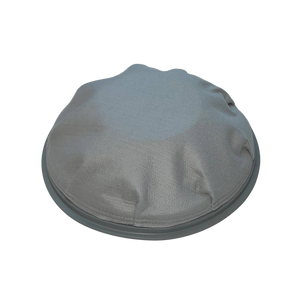
In a staged filtration system — cloth pre-filter upstream of a High Efficiency Particulate Air element — does the pre-filter stage affect the gasket seal requirement at the High Efficiency Particulate Air stage?
The gasket seal requirement at the High Efficiency Particulate Air filter stage is unchanged regardless of what the pre-filter captures upstream. The cloth pre-filter captures the coarse bulk fraction and extends High Efficiency Particulate Air element service life by reducing particulate load reaching the High Efficiency Particulate Air medium, but it does not eliminate the bypass risk at the High Efficiency Particulate Air filter-to-housing interface. Both stages of a staged system must seal to their respective housings for each stage to perform as designed. Satisfactory sealing at the pre-filter stage has no bearing on the integrity of the seal at the High Efficiency Particulate Air stage — each interface requires its own inspection and verification.