





Construction Dust Control: Why Source Capture Matters More Than Cleanup
|
|
Temps de lecture 16 min
Vous possédez un compte ?
Connectez-vous pour payer plus vite.

|
|
Temps de lecture 16 min
Every construction site generates dust. Whether professionals are cutting concrete slabs, grinding welds, drilling into masonry, or sanding drywall seams, fine particles become airborne as a direct and unavoidable consequence of the work being performed. Dust control on a job site is not optional — it is a fundamental operational requirement that affects worker health, regulatory compliance, and overall site efficiency.
In many operations, dust control is still treated as a cleanup problem: something addressed once the task is complete, when particles have already settled across tools, surfaces, and adjacent work zones. This reactive approach to dust control may feel familiar, but it leaves the most critical phase — the moment of generation — entirely unaddressed. Effective dust control must begin before particles enter the air, not after they have spread across the workspace.
The distinction matters operationally. According to the Occupational Safety and Health Administration (OSHA), workers in construction face significant risks from respirable crystalline silica — a byproduct of cutting and grinding concrete, stone, and masonry. OSHA's Silica Rule (29 CFR 1926.1153) establishes specific requirements for dust control, including the use of engineering controls such as integrated vacuum systems at the point of operation. Proper dust control under this standard is a legal requirement, not a preference.
This blog examines why dust control must begin at the source, how vacuum systems support that process, and what equipment variables determine real-world dust control performance. For contractors and site managers evaluating professional-grade vacuum equipment, Mastercraftusa.com offers a range of systems built specifically for demanding dust control applications in construction environments.
To understand why source capture is the most effective approach to dust control, it helps to understand how dust behaves once it is released into the environment.
When a material is disturbed — through cutting, grinding, or abrasion — particulate is released in two distinct phases. The first is the airborne phase: particles become suspended in the surrounding air immediately upon generation. This is where dust control is most critical and most difficult to achieve after the fact. The second is the settled phase: over time, heavier particles fall out of suspension and accumulate on surfaces — where they become visible but represent only part of the dust control problem.
Effective dust control focuses primarily on the airborne phase, and for good reason:
Airborne dust particles travel beyond the immediate work area, making dust control across adjacent zones significantly more complex.
Respirable dust particles — those under 10 microns — remain suspended in air for extended periods and penetrate deep into the respiratory system when inhaled, making real-time dust control the only meaningful protective measure.
Fine dust particles are often invisible to the naked eye, meaning workers may be exposed without any visible indication — a core reason why passive dust control approaches are insufficient.
Once airborne, dust particles are significantly more difficult to contain than at their point of origin, reinforcing the case for dust control at the source.
The National Institute for Occupational Safety and Health (NIOSH) has documented that construction workers face some of the highest rates of occupational silica exposure across all industries. NIOSH research confirms that dust generated during dry cutting and grinding operations can produce respirable particulate concentrations that exceed permissible exposure limits within seconds — underscoring the urgency of real-time dust control rather than post-task cleanup.
Settled dust, while easier to see and collect, represents only a portion of total particulate generated. A significant fraction of the finest dust particles — those with the highest potential for respiratory impact — may remain suspended in air, be carried out of the work area by ventilation currents, or settle in locations that are difficult to access. This is why dust control that relies solely on cleanup is structurally incomplete.
This is the foundational argument for source-capture dust control: the critical moment is not when dust is visible — it is when dust is generated. At that moment, dust control is both most achievable and most impactful.
Airborne particle concentration (relative units) at 0, 30, 60, and 120 seconds after task start
Post-task cleanup has long been a standard practice on construction sites, and it serves a legitimate function in overall site management. However, relying on cleanup alone as the primary dust control strategy introduces a series of compounding limitations that become more significant at scale. Understanding these limitations is essential for any contractor seeking to build a credible dust control program.
By the time a cleanup cycle begins, airborne particles have already moved. Depending on the duration of the task, ambient air movement, and the type of material being worked, particulate may have traveled several meters from the point of origin and settled on surfaces across a wide area. Cleanup addresses what is visible, not the full scope of what was generated.
By the time a cleanup cycle begins, airborne dust has already moved. Depending on the duration of the task, ambient air movement, and the type of material being worked, dust particles may have traveled several meters from the point of origin and settled on surfaces across a wide area. This means that post-task dust control addresses what is visible, not the full scope of what was generated — leaving significant dust control gaps in the overall program.
Traditional cleanup methods — dry sweeping in particular — are widely recognized as counterproductive for fine-particle dust control. The Environmental Protection Agency (EPA) has noted that sweeping and blowing dust without adequate collection systems redistributes fine particles back into the air rather than removing them from the environment. This creates a redistribution cycle rather than true dust control removal — and is precisely the opposite of what a structured dust control program should achieve.
From a purely operational perspective, vacuum systems applied only at the end of a task are addressing a condition that has already developed — accumulated dust contamination across surfaces. This requires more effort to manage the same volume of material than would have been required with dust control at the point of generation. Without proactive dust control, the equipment works reactively rather than preventively, and the overall dust control program suffers in efficiency.
On job sites where multiple trades work in proximity, unsupported dust control cycles create cross-contamination risk. Dust generated in one zone spreads into others, affecting workers who had no direct involvement with the dust-generating task. This is particularly relevant in interior renovation environments where HVAC systems are active and can distribute fine dust particles across building zones — expanding the dust control problem beyond a single crew or task.
Approach |
When Dust Is Addressed |
Airborne Exposure Risk |
Cleanup Effort Required |
Regulatory Alignment |
Post-Task Cleanup Only |
After task completion |
High — particles already dispersed |
High — wide surface area affected |
Limited |
Source Capture (Integrated) |
At point of generation |
Significantly reduced |
Reduced — less secondary spread |
Aligned with OSHA 1926.1153 |
Hybrid (Source Capture + Cleanup) |
At generation + post-task |
Low |
Minimal |
Strong alignment |
Source capture is an equipment-based approach to dust control that addresses particulate at the moment it is generated, rather than after it has dispersed into the surrounding environment. Instead of operating as a post-task dust control cleanup tool, the vacuum system is integrated directly into the work process — connected to the cutting, grinding, drilling, or sanding tool at its point of contact with the material. This positions dust control where it has the greatest operational impact.
This integration changes the dust control model fundamentally. The vacuum system is not waiting for dust to accumulate — it is capturing particulate in real time, at the source, before it has the opportunity to enter the surrounding air. This is a proactive form of dust control, not a reactive one.
When a vacuum system is connected directly to a grinder, circular saw, rotary hammer, or sanding tool, the airflow generated by the vacuum creates a low-pressure zone at the cutting interface. Dust released during operation is drawn into this zone and transported through the hose assembly into the vacuum's filtration chamber — rather than being expelled into the ambient air of the work environment. This is the core mechanism of source capture dust control, and it is what separates it fundamentally from any post-task dust control approach.
The effectiveness of this dust control process depends on several technical factors, which are examined in the next section. However, the underlying dust control principle is consistent: capture happens at the point of generation, which is the most efficient point in the dust lifecycle to intervene.
OSHA's Silica Standard for Construction (29 CFR 1926.1153) specifies a hierarchy of controls for managing silica dust control and exposure. Engineering controls — including integrated local exhaust ventilation (LEV) — are positioned above administrative controls and personal protective equipment (PPE) in the regulatory dust control hierarchy. Vacuum systems with HEPA filtration connected directly to tools represent a recognized engineering dust control measure under this standard. More information on the dust control requirements is available through the OSHA Silica Rule page.
The principle of source capture as a preferred dust control approach is not limited to silica. The American Industrial Hygiene Association (AIHA) broadly advocates for engineering dust control at the point of generation as the most effective means of reducing occupational dust exposure across all material types.
Source capture system
captured before dispersing
Post-task cleanup only
captured before dispersing
Share of total particulate captured before entering ambient air
Not all vacuum systems perform equally in a source capture dust control application. The effectiveness of dust control at the point of generation depends on how the equipment is designed and configured across several key variables. Understanding these variables helps contractors make informed decisions when selecting dust control equipment for their specific applications.
Airflow — measured in cubic feet per minute (CFM) — is the primary driver of dust control capture efficiency. Sufficient airflow creates the low-pressure zone at the tool interface necessary to draw dust into the collection path before it disperses. Equally important is the consistency of that airflow throughout the work session. Inconsistent airflow leads to inconsistent dust control — particles escape during moments of reduced suction and the overall dust control program becomes unreliable.
Some vacuum systems experience progressive airflow reduction as the collection chamber fills or as filters become loaded. Systems that incorporate automatic filter-cleaning mechanisms — such as pulsed-air filter cleaning — maintain more consistent airflow throughout extended use, supporting sustained dust control performance rather than degraded dust control output over time.
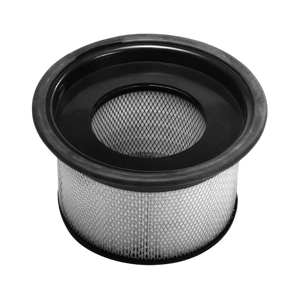
Capture efficiency addresses whether dust enters the vacuum system. Filtration efficiency addresses whether it stays there. Multi-stage filtration systems — typically incorporating a pre-separation stage followed by primary filtration and, where required, a HEPA final filter — are essential for complete dust control. Without adequate filtration, captured dust can pass through the system and be re-released into the workspace, defeating the purpose of the dust control system entirely.
HEPA filtration, as defined by the U.S. Department of Energy, captures 99.97% of particles at 0.3 microns — the most penetrating particle size. For dust control applications involving silica, lead-containing dust, or other regulated substances, HEPA filtration is a recognized requirement, not an optional dust control upgrade.
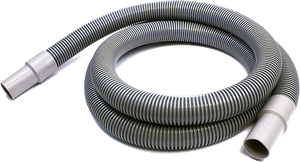
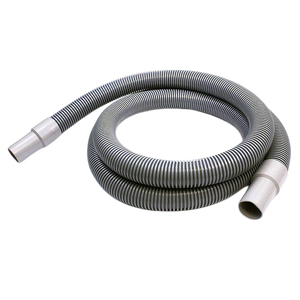
The physical connection between the vacuum system and the tool directly influences dust control capture effectiveness. Hose diameter, length, and connection design all affect airflow delivery at the tool interface. Larger-diameter hoses support higher airflow but may limit maneuverability. Anti-static hose construction reduces dust adherence and static buildup during operation — particularly relevant for fine dry dust where static can compromise dust control performance.
Tool compatibility — the ability of the vacuum to interface with a variety of power tools through appropriate accessories and adapters — expands the practical range of dust control applications where source capture can be effectively deployed.
Construction environments are inherently dynamic, and dust control equipment must keep pace. Source capture dust control systems must support movement across different elevations, areas, and task types without creating workflow interruptions. Compact, wheeled vacuum units with adequate hose length and organized cable management are better suited for multi-zone dust control operations than stationary systems that require full repositioning between tasks.
Higher container capacity reduces the frequency of dust control interruptions for emptying, supporting sustained workflow. Equally important is the design of the emptying system: self-closing bags, sealed container designs, and filtered-air exhaust prevent secondary dust exposure during the emptying process — a commonly overlooked aspect of dust control system design that can undermine an otherwise effective dust control program.
Equipment Variable |
Impact on Performance |
What to Look For |
Airflow (CFM) |
Determines capture zone effectiveness |
High CFM with auto filter-cleaning |
Filtration stages |
Prevents re-release of captured dust |
Multi-stage with certified HEPA final filter |
Tool integration |
Affects capture at the cutting interface |
Compatible accessories, anti-static hose |
Mobility |
Supports multi-zone operations |
Wheeled unit, adequate hose length |
Container capacity |
Reduces workflow interruptions |
Large capacity + sealed emptying system |
The effects of effective construction dust control at the point of generation extend well beyond the cleanliness of the work surface. When particulate is captured in real time, the operational environment changes in several interconnected ways.
The most direct impact is on the concentration of airborne particulate during the task itself. When a vacuum system captures dust at the source, the volume of particulate entering the ambient air of the work area is substantially reduced. This reduces exposure for the operator and for others working in proximity — a meaningful operational benefit in enclosed environments such as interior renovation, basement work, or mechanical room access.
In multi-trade environments, particulate generated by one crew can affect conditions for others working in adjacent zones. Source capture significantly limits this cross-contamination by preventing the initial dispersion of particulate. This supports more predictable site conditions and reduces the potential for inter-trade conflicts related to site cleanliness standards.
When less dust is dispersed during the work process, less dust needs to be addressed afterward. This has a direct impact on labor time allocation: crews spend less time on secondary cleanup and more time on primary productive tasks. Over the course of an extended project, this reallocation of time contributes to measurable workflow efficiency gains.
For contractors operating under OSHA's Silica Standard, engineering controls at the point of generation are not optional — they are required for specified tasks involving regulated materials. Maintaining compliant construction dust control practices supports audit readiness, reduces exposure to OSHA citation risk, and demonstrates a structured approach to worker health protection. The OSHA Construction Silica Enforcement Guidance outlines the specific tasks and corresponding engineering control requirements contractors should be familiar with.
Dust accumulation affects not only worker health but also equipment performance. Power tools, lasers, measurement instruments, and other site assets are susceptible to damage from fine particulate contamination. Reducing dust dispersion at the source extends the serviceable life of site equipment and reduces maintenance requirements — a cost consideration that is often underweighted when evaluating the investment in vacuum systems.
Performance score (0–100) across five key site management dimensions
Construction dust control is most effective when it is treated as part of the work process rather than as a task that follows it. By the time particulate has settled, it has already been airborne, has already traveled beyond the work zone, and has already created conditions that cleanup alone cannot fully address.
Source capture shifts dust management to where it has the greatest impact: the moment of generation. Applied through integrated vacuum systems connected directly to cutting, grinding, drilling, and sanding equipment, source capture captures particulate before it enters the surrounding environment — reducing airborne exposure, limiting cross-contamination, and decreasing the burden of post-task cleanup.
Key takeaways for contractors and site professionals evaluating their approach to construction dust control:
The airborne phase of dust generation carries the highest exposure risk and the greatest potential for dispersion — this is where control is most valuable.
Post-task cleanup is a necessary component of site management but is insufficient as a primary dust control strategy.
Source capture, implemented through properly configured vacuum systems, addresses particulate at the point of generation — the most operationally effective point of intervention.
Equipment performance in source capture applications depends on airflow capacity, filtration architecture, tool integration, and mobility — not on collection volume alone.
OSHA's Silica Standard (29 CFR 1926.1153) establishes engineering controls as the primary compliance pathway for high-risk dust-generating tasks in construction. Source capture systems with HEPA filtration align directly with these requirements. Review the full standard at OSHA.gov.
For contractors seeking professional-grade vacuum equipment designed for source capture applications in construction environments, Mastercraftusa.com offers a range of systems built for demanding jobsite conditions — from interior renovation to heavy concrete and masonry work.
Effective construction dust control is not a product of any single tool or feature. It is the result of selecting the right equipment and integrating it into the work process in a way that addresses particulate where the problem begins.
Key questions about dust control strategy, source capture equipment, filtration, and regulatory compliance.
Dust control in construction refers to the methods and equipment used to prevent or limit the dispersal of fine particulate generated during cutting, grinding, drilling, and sanding operations. Effective dust control matters because airborne particles pose significant health risks to workers — including respirable crystalline silica exposure — and because OSHA's Silica Standard (29 CFR 1926.1153) requires engineering dust control measures for specified tasks involving regulated materials.
Source capture dust control integrates a vacuum system directly into the work process — capturing particulate at the point of generation before it enters the air. Post-task cleanup addresses dust only after it has already dispersed across surfaces and through the work area. Source capture dust control is more effective because it intervenes at the critical moment of generation, preventing exposure rather than reacting to it. Post-task cleanup remains a useful supplement but is insufficient as a standalone dust control strategy.
Airborne dust particles — particularly those under 10 microns — remain suspended in air for extended periods and penetrate deep into the respiratory system when inhaled. Settled dust is visible and easier to collect, but it represents only a portion of the total particulate generated. According to NIOSH, respirable silica concentrations from dry cutting and grinding can exceed permissible limits within seconds of operation — which is why real-time dust control is essential rather than optional.
For dust control applications involving silica, lead-containing dust, or other regulated substances, HEPA filtration is a recognized requirement under OSHA's Silica Standard. As defined by the U.S. Department of Energy, a HEPA filter captures 99.97% of particles at 0.3 microns. Effective dust control also requires the vacuum system to be fully sealed — so that all airflow passes through the HEPA filter without bypass, which would otherwise reintroduce captured dust back into the work environment.
The most critical variables for dust control performance are: airflow capacity (CFM), which determines whether dust is captured at the source or escapes; filtration architecture, including multi-stage and HEPA filtration; tool integration quality, including hose size and connection design; mobility and adaptability for dynamic job site conditions; and container capacity, which affects how frequently dust control operations must be interrupted for emptying. Each variable directly impacts the reliability of the overall dust control system.
OSHA's Silica Standard (29 CFR 1926.1153) places engineering dust control measures — including integrated local exhaust ventilation — above administrative controls and PPE in the hierarchy of controls. Source capture vacuum systems with HEPA filtration connected directly to tools are a recognized engineering dust control measure under this standard. Contractors who maintain a documented dust control program aligned with these requirements support audit readiness and reduce OSHA citation risk. Full enforcement guidance is available at OSHA.gov.
Yes. When dust control is applied at the point of generation, significantly less particulate disperses into the surrounding environment. This means fewer surfaces are affected, less material accumulates across the work area, and post-task cleanup requirements are reduced. Over an extended project, this reallocation of labor time — from reactive cleanup to primary productive tasks — represents a measurable workflow efficiency gain driven directly by effective dust control practices.
Yes. Portable, wheeled dust control vacuum systems are designed to support movement across different elevations, areas, and task types without interrupting workflow. In multi-trade environments, consistent dust control at the source also limits cross-contamination between work zones — reducing the spread of dust from one crew's operations into areas occupied by other trades. This makes source capture dust control particularly valuable on large interior renovation and commercial construction projects.
Mastercraft Insight
Explore how this topic connects to long-term productivity, equipment durability, and professional floor operations.
Read the Article →
